
Choosing recycled plastic granules isn’t just about getting the polymer type right; that’s only half the picture. One property that matters just as much, and often gets overlooked, is melt flow rate (MFR), also known as melt flow index (MFI). In simple terms, it tells you how easily the plastic flows once it’s melted. This is exactly the kind of detail that determines whether a batch processes smoothly on your line or gives you inconsistent results and off-spec parts.
For those businesses using recycled HDPE granules, recycled LDPE granules, or other forms of recycled polypropylene, understanding MFR can help reduce production issues, improve efficiency, and ensure the final product performs as expected.
What is Melt Flow Rate (MFR)?
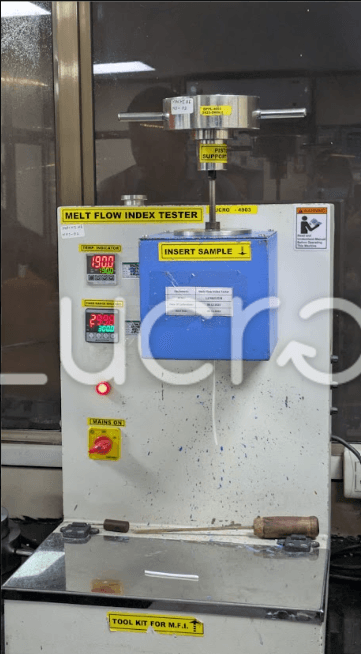
Melt flow rate, sometimes also called melt flow index (MFI); the two terms are used interchangeably, measures how easily a molten plastic flows through a standard die under specified temperature and load conditions within 10 minutes. In practice, a lab heats a small sample of resin to a set temperature, applies a standard weight, and measures how many grams of material push through a narrow opening in ten minutes. That number, expressed in g/10min, is the MFR.
In simple terms:
- Higher MFR: The plastic flows easily under controlled temperature and pressure, perfect for thin-wall parts or moulds that need to capture a lot of fine detail.
- Lower MFR: The plastic is thicker, durable, and doesn’t flow as freely, but that’s what gives it the extra strength needed for tougher, more durable applications.
Since post-consumer recycled granules can come from a mix of sources, MFR becomes one of the key quality checks that helps keep things consistent once material hits the production line.
Why MFR matters for B2B buyers
When you’re sourcing recycled plastic granules, it pays to look past the price tag and ask how the material will actually behave once it’s running through your machine. Getting the MFR right helps you:
- Improve processing efficiency during moulding or extrusion
- Maintain consistent product quality in every production batch
- Reduce machine downtime caused by unsuitable material flow
- Reduce rejects and material wastage
- Achieve reliable mechanical performance in the finished product
For manufacturers, choosing recycled plastic granules with the right MFR isn’t some fine-print detail; it’s often the one thing standing between a production run that goes off without a hitch and one that leaves you with inconsistent results.
MFR Values for rHDPE, rLDPE and rPP
While MFR values vary depending on the recycling process and formulation, typical industry ranges include:
- Recycled HDPE granules (rHDPE): Typically 0.2 to 50 g/10min, depending on whether the application is blow moulding, pipe extrusion, or injection moulding.
- Recycled LDPE granules (rLDPE): Usually 0.1 to 20 g/10min, with the lower end favoured for film, plastic bags, and sheet extrusion where melt strength matters.
- Recycled PP granules / recycled polypropylene (rPP): Generally 1 to 100 g/10min. Injection-moulded household items often need MFR in the 10-35 range, while thin-wall packaging may need it even higher.
Actual specifications should always be verified with the manufacturer of plastic granules before procurement.
How to Match MFR to Your Application
Choosing the right melt flow rate really comes down to two things: how you plan to process the recycled plastic granules, and what you’re actually making. Get the grade’s MFR right, and you’ll usually notice it in smoother production runs and more consistent output.
- Film and pipe extrusion: Lower MFR grades are often preferred because they can provide the melt strength needed to maintain product shape.
- Blow moulding: Lower-flow grades are commonly used to help maintain the molten material’s shape during moulding.
- Injection moulding: MFR requirements vary with the part design. Higher-flow grades can help fill thin-walled or complex molds, while lower-flow grades may also be suitable for applications where the mould and product requirements allow them.
But matching MFR to your application isn’t just about ticking a technical box. It’s often the difference between a process that runs smoothly, reducing production issues, and achieving consistent performance in the finished product.
Common mistakes buyers make ignoring MFR
Some buyers focus mainly on polymer type and treat MFR as an afterthought or skip checking it altogether. That one gap can lead to processing issues, inconsistent product quality, higher rejection rates, and manufacturing costs that quietly add up over time. One mistake that trips buyers up just as often is assuming all recycled polypropylene or recycled polyethylene grades behave the same way when it comes to flow. Another is comparing MFR values without checking the test temperature and load. MFR results are meaningful only when the testing conditions are comparable.
Lucro’s Grade-Specific PCR Granule Range
As a manufacturer of plastic granules, Lucro produces post-consumer recycled granules from carefully processed plastic waste. The grade-specific PCR range exists for a simple reason: different manufacturing applications need different things from their material, and one generic grade can’t serve them all. So instead of forcing your process to adjust to whatever batch you get, you pick the grade that actually fits what you’re making, and the production efficiency follows from there.
Conclusion
Melt flow rate is one of the first things worth checking when you’re selecting recycled plastic granules for a production run. Once you understand where a batch of recycled granules sits on the MFR scale, it becomes much easier to pick material that actually fits your process, keeps operations running smoothly, and holds up to consistent quality standards. And working with a supplier who’s transparent about their PCR grades makes that whole process a lot less stressful; it’s what lets manufacturers bring sustainable materials into their line with confidence instead of guesswork.