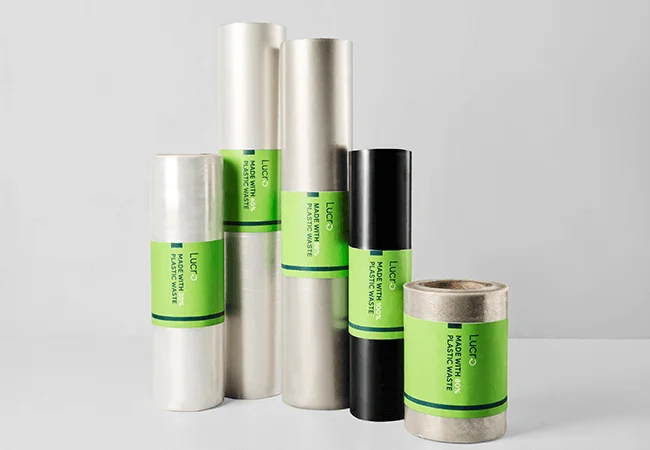

Plastics are a huge part of our everyday lives, but not all plastics are the same. With their durability, versatility, and wide recyclability, HDPE granules play an important role in the circular economy, and responsible recycling and upcycling are becoming increasingly important. With EPR compliance getting stricter and targets for the use of recycled content increasing each year, businesses are under growing pressure to adopt sustainable material practices. By understanding how HDPE is made, recycled, and repurposed, both businesses and consumers can make informed choices that support the responsible and sustainable use of resources.
HDPE is a hard plastic initially derived from petroleum. It’s one of the most common plastics in the world. It has a great strength-to-density ratio and is suitable for things that need to withstand impact, chemicals, and changing weather conditions.
You’ve seen HDPE everywhere, in milk jugs, shampoo bottles, industrial pipelines, transport crates, and ordinary household products. Unlike many plastics that break down after only one trip through the recycling facility, HDPE can be melted down and reused several times without losing its performance.


What makes HDPE one of the most preferred engineering materials in so many different sectors? It all comes down to a few key properties of HDPE:
These properties make HDPE to be used in everyday household products as well as large industrial pipelines, while allowing the material to be recycled efficiently.
Most people don’t think twice about what happens to a shampoo bottle or milk jug after it hits the recycling bin. But there’s actually quite a bit that goes into giving that plastic a second life, and that’s exactly what HDPE plastic recycling is all about.
HDPE plastic recycling is simply high-density polyethylene that’s been pulled from post-consumer waste and processed back into usable raw material. The old plastic gets a second shot at being something useful. It stretches the life of the polymer and means fewer virgin resources need to be extracted in the first place. Once the material is gathered, it goes through sorting, cleaning, processing, and quality checks before it becomes what’s known as post-consumer recycled resin that manufacturers can actually work with.
HDPE grades most commonly produced from recycled HDPE include:
These are among the most common grade categories into which recycled HDPE is processed, depending on the quality of the recovered material and the intended application.
HDPE recycling process isn’t a single-step thing; it’s a carefully controlled process where each stage matters. Contaminants are removed, the material is restored, and what comes out is recycled HDPE that’s genuinely reliable enough for manufacturing durable new products.
Collection: Post-consumer waste is collected through organised recovery systems and material collection partners such as safai-saathis.
Sorting: The collected HDPE is separated from other plastics based on its resin type and grade.
Cleaning Process: Labels, dirt, adhesives, and other impurities are removed to prepare the material for further processing.
Grinding and Washing: After sorting, the HDPE plastic is first shredded or ground into smaller flakes. These flakes are then thoroughly washed to remove dirt, labels, adhesives, and other contaminants, as smaller pieces are easier to clean effectively.
Pelletizing: The flakes are melted, filtered, and converted into uniform HDPE pellets or post-consumer recycled granules for future manufacturing.
Quality Testing: The finished PCR material is tested for consistency, strength, and suitability for manufacturing applications.
This upcycling process gives post-consumer materials a second life by turning them into reliable raw materials for new production.


rHDPE granules are very commonly used across various industries because of their durability and processing flexibility.
Common HDPE granule applications include various non-food contact applications such as:
With the growing use of recycled high-density polyethylene, manufacturers are mixing larger amounts of PCR materials into daily products to advance resource efficiency and circular manufacturing.
HDPE is one of today’s most versatile recyclable materials. It is a key material for sustainable manufacturing for its durability, strength, and its capacity to be recycled many times. The industry may employ modern upcycling techniques to transform post-consumer garbage into HDPE granules and produce desirable products for numerous sectors with less dependence on virgin resources. As recycling technologies continue to advance, post-consumer recycled materials will become increasingly vital for building a more circular plastics environment.