India’s relationship with plastic is changing fast. As regulation tightens and brands commit to sustainability, the businesses that recover and reprocess plastic waste have moved from the margins to the mainstream. This guide looks at who these plastic recyclers in India are, how the industry works, and what to look for when choosing a partner.
What are “Recyclers of India”? Understanding the Industry
The phrase Plastic Recyclers and Waste Collection Companies refers to the companies and networks that collect, process, and transform used plastic into reusable material. They range from small informal aggregators to fully integrated operations that manage everything from doorstep collection to finished recycled goods. Together, they form the backbone of the country’s circular economy — keeping plastic in use and out of landfills and oceans. Modern recyclers of India increasingly combine sourcing, sorting, and manufacturing under a single traceable system, helping businesses move away from linear models.The Plastic Recycling Business in India: Market size & growth
The plastic recycling business in India is expanding quickly. Industry research estimates the country’s waste plastic recycling market reached 11.92 million tons in 2025 and is projected to reach 25.88 million tons by 2034, growing at a compound annual growth rate of 9%. This momentum is driven by rising demand for recycled content in packaging, automotive, and construction, along with Extended Producer Responsibility (EPR) rules that now require brands to use recycled material. As a result, the plastic recycle industry in india is formalising, shifting from scattered, informal activity toward organised, quality-certified supply chains.
How Plastic Waste Recycling Works – From collection to granules
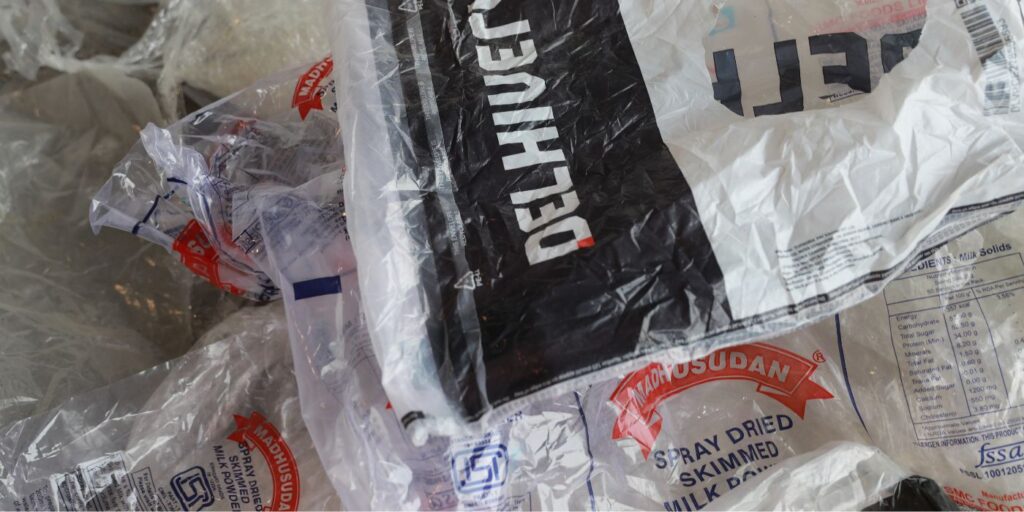
At its core, plastic waste recycling follows a clear path. It begins with collection, where post-consumer plastic is gathered from households, businesses, and waste pickers. The material is then sorted by polymer type, cleaned to remove contaminants, and shredded into flakes. Those flakes are washed, dried, and melted into uniform recycled granules that manufacturers can use in place of virgin plastic. Integrated recyclers like Lucro manage each of these stages in-house, you can see how this end-to-end process works on the Lucro Solutions page.
Recycled Plastic Products – What gets made from Recycled Plastic?
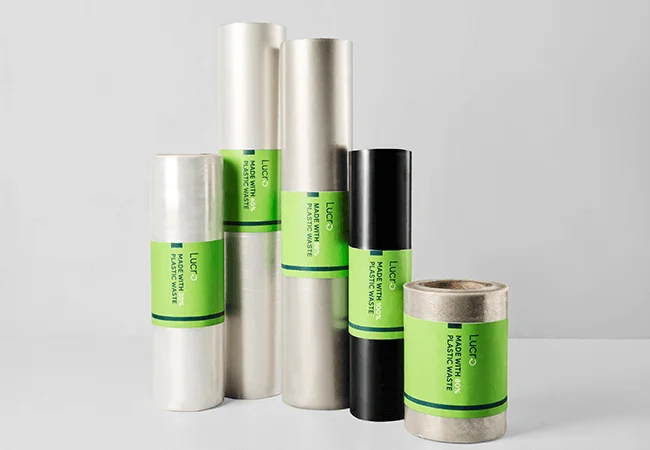
Recycled plastic products can be transformed into a wide range of products depending on the type and quality of plastic material recovered. Recycled rLDPE, rHDPE and rPP granules are used as raw materials to make products such as flexible packaging, automotive covers, non-food packaging applications and even automotive components. Because these products can hold up to 100% post-consumer recycled content, they let brands cut their reliance on virgin plastic without compromising on performance.
Overview of India’s Plastic Recycle Industry
India’s recycling sector is unusual in its scale and structure. A large share of collection is still powered by informal waste pickers, whose work is now being integrated into formal systems through training, fair payment, and digital traceability. This blend of grassroots collection and advanced processing is what makes the plastic recycling industry in India both resilient and rapidly improving; and it’s a key reason global brands increasingly source recycled material here.
What to Look for in a Plastic Recycling Partner?
With many plastic recycling companies in India now in the market, choosing the right one matters. Rather than ranking providers, it helps to look for a few clear qualities: full traceability from collection to finished product; consistent, tested and certified material; the ability to meet EPR and recycled-content requirements; and transparency around social and environmental impact. A partner that manages both collection and manufacturing gives brands a simpler, more accountable and reliable supply chain.
Conclusion
The plastic recyclers in India shaping this industry are helping the country turn a waste problem into a genuine resource. As demand for recycled material grows, working with an integrated, traceable recycler is one of the most practical steps a brand can take toward a circular future.