RecyClass Certification in India: What Lucro’s Recycling Facility Certification Means for Brands
Recycled content claims are only as strong as the evidence behind them. As Indian brands work towards recycled-content targets under Extended Producer Responsibility (EPR) and export customers ask harder questions about where recycled plastic actually comes from, third-party verification has become the deciding factor between a claim that holds up and one that does not. Lucro’s recycling facility at Vankas, Valsad, Gujarat, holds a RecyClass Recycling Process Certificate, one of a small number of RecyClass certifications in India. This article explains what the certification covers, why it matters in the Indian context, and what it means in practice for brands and converters sourcing recycled polymer from Lucro.
What is RecyClass certification?
RecyClass is a European, cross-industry initiative that sets science-based standards for the recyclability of plastic packaging and for the traceability of recycled plastic. It runs three linked certification schemes: recyclability certification for packaging design, Recycling Process certification for recycling facilities, and Recycled Plastics Traceability certification for products that contain recycled content.
The Recycling Process certification is the one that applies to a recycler such as Lucro. It verifies that a facility handles plastic waste and produces recycled plastic in a controlled, documented and traceable way. The scheme is aligned with the European standard EN 15343:2007 on plastics recycling traceability and with ISO 22095:2020 on chain of custody, using the controlled-blending model. An accredited certification body conducts a physical audit of the site, checks the origin and documentation of incoming waste, inspects the recycling process in operation, and verifies the recycled output. The audit is repeated annually, so the certificate reflects current practice rather than a one-off inspection.
Why RecyClass certification matters in India
Until recently, RecyClass certification in India was rare, because the scheme grew out of European packaging regulation. That is changing for three reasons.
Recycled-content mandates under EPR. India’s Plastic Waste Management rules now require producers, importers and brand owners to use minimum percentages of recycled plastic in packaging, rising year on year. Meeting these targets means brands need recyclers whose recycled content can be documented and defended in an audit, not just declared.
Export packaging and the EU rules. Indian FMCG, chemical and industrial companies that export to Europe are increasingly asked to demonstrate recycled content in their packaging under the EU Packaging and Packaging Waste Regulation (PPWR). RecyClass is one of the recognised routes to that evidence, so an Indian recycler holding the certification removes a barrier for its customers.
Brand credibility. Greenwashing scrutiny has increased in India as well as abroad. A recycled-content claim backed by an internationally recognised, independently audited certification is far harder to challenge than an internal declaration.
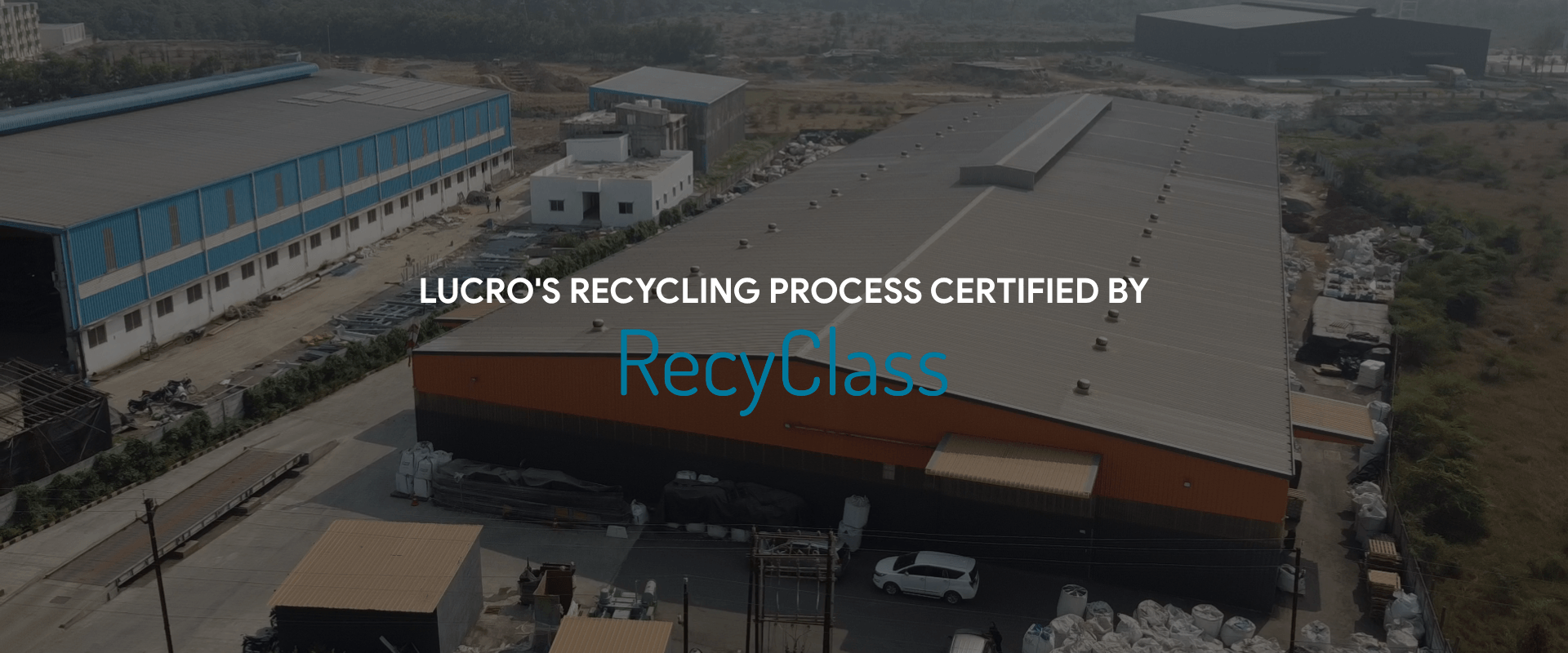
Lucro’s RecyClass-certified recycling facility at Vankas, Valsad
Lucro’s mechanical recycling facility at Vankas, near Umbergaon in Valsad district, Gujarat, converts post-consumer plastic waste collected across India into recycled granules. The certified process takes post-consumer polypropylene (PP), high-density polyethylene (PE-HD) and low-density polyethylene (PE-LD) film waste from households, received as bales and bulk, through sorting, shredding and agglomeration to produce recycled pellets. These feed Lucro’s recycled granule grades supplied to converters in packaging, automotive and consumer goods.
The facility was audited by Control Union, an ENAC-accredited certification body, with the initial audit on 9 October 2025. The RecyClass Recycling Process Certificate was first issued in December 2025. It confirms that the recycling process and its management systems meet the RecyClass Recycling Process Audit Scheme, version 1.1, in line with EN 15343:2007, using the controlled-blending chain-of-custody model at traceability level 2.
The certificate covers two modules. The General module, at level 2, verifies the traceability of the recycling process itself. Module C, on Corporate Social Responsibility, at level 1, additionally verifies that the facility’s labour, health and safety and social practices were assessed as part of the same audit, which is unusual for a recycling certificate and relevant to brands that audit their suppliers on social criteria as well as environmental ones.
What the audit verifies
A RecyClass Recycling Process audit looks at the whole chain inside the facility, not just the final product:
- Waste origin. Incoming material is checked against supplier records to confirm it is post-consumer plastic from traceable sources, which for Lucro means its own collection network and vendor partners rather than anonymous spot purchases.
- Input and output records. Mass balance between waste received, material processed and granules produced must be documented and reconciled.
- Process control. Sorting, shredding, agglomeration and quality control procedures are inspected in operation.
- Product identification. Recycled granules must be labelled and stored so that each batch can be traced back to its input material.
- Management system. Responsibilities, training and record-keeping are reviewed to ensure the controls are maintained between audits.
What this means for brands sourcing recycled plastic
For a brand or converter, buying recycled granules from a RecyClass-certified recycler in India changes what you can say and prove.
- Auditable recycled-content claims. Certified output can be used to support recycled-content declarations under Indian EPR reporting and, for exporters, under European requirements.
- Traceability to source. Each batch of granules is traceable to verified post-consumer waste, which supports both compliance and sustainability reporting.
- Consistent quality. The process controls the audit examines are the same ones that keep melt flow, impact strength and colour consistent from batch to batch, which is what converters see on the line.
- Lower due-diligence cost. A recognised certificate reduces the supplier audits customers would otherwise have to run themselves.
Lucro’s recycled granules are available in rPP, rHDPE and rLDPE grades, each with a technical data sheet, and the certification applies across the output of the Vankas facility.
How RecyClass fits with Lucro’s other certifications
RecyClass certification sits alongside Lucro’s existing verification, including its Ocean Bound Plastic certification for collection and recycling of plastic recovered near coastlines, and its management-system certifications. Together they cover the questions customers ask most often: where the waste came from, how it was processed, and whether the recycled content in the finished granule can be proven.
Frequently asked questions
Is RecyClass certification recognised in India?
RecyClass is a European scheme, but its certificates are recognised internationally because they are issued by accredited certification bodies against published standards. In India it is most valuable to brands that report recycled content under EPR or that export packaged goods to Europe.
What is the difference between RecyClass and a recyclability label on packaging?
A recyclability certification assesses whether a packaging design can be recycled. The Recycling Process certification held by a recycler assesses how the recycling facility itself operates and whether its recycled output is traceable. The two complement each other.
Does RecyClass certification guarantee a percentage of recycled content?
The Recycling Process certification verifies that the facility’s output is genuinely recycled plastic from traceable post-consumer sources. Recycled-content percentages in a finished product are covered by the separate Recycled Plastics Traceability certification, which builds on certified recyclers like Lucro as the starting point.
Conclusion
RecyClass certification in India is still uncommon, and that is exactly why it matters. For Lucro, the certification of the Vankas, Valsad facility turns a recycled-content promise into an independently audited fact, and gives customers the documentation they need for EPR reporting, export compliance and credible sustainability claims. If you are specifying recycled granules and need the paperwork to stand up to scrutiny, that is the difference a certified recycler makes.