What are recycled plastic granules?
Recycled plastic granules — also known as Post-Consumer Recycled (PCR) granules — are pelletised resin made by collecting, sorting, washing, and reprocessing post-consumer or post-industrial plastic waste into a form that drops into standard extrusion, blow moulding, and injection moulding lines. For a converter or brand owner sourcing PCR material, the label on its own tells you very little; what matters is which polymer family the granule belongs to, and how consistently a manufacturer of plastic granules tests and calibrates each batch. In India, three polyolefin families account for most of the PCR granule volume in circulation: rHDPE, rLDPE, and rPP. Each is built on a different base polymer, and each performs differently once it’s back on a production line.
Recycled plastic can be made from PIR- (Post Industrial Recyclate) which is made from post industrial waste that is always clean material or PCR (Post Consumer Recyclate) which is made from post-consumer dirty waste. Lucro only recycles post-consumer waste.
Difference between HDPE and LDPE
Before comparing recycled grades, it’s worth separating the two base polymers they come from. HDPE (high-density polyethylene) has a more linear molecular chain and higher crystallinity, which gives it greater rigidity, tensile strength, and resistance to chemicals and moisture. LDPE (low-density polyethylene) has a branched chain structure and lower crystallinity, which makes it softer, more flexible, and better suited to thin-gauge film. That structural gap carries over directly into their recycled counterparts, rHDPE and rLDPE, and it’s the first filter to apply when choosing between them.
Understanding post consumer rHDPE — properties and applications
Recycled HDPE granules are typically recovered from post-consumer rigid packaging: shampoo bottles, cooking oil containers, and similar household plastic. Lucro’s rHDPE range covers general-purpose blow moulding grades (HDM02, HDGY03, HDBY03, HDMBM01), a pipe-grade line (HDP01, HDBK01), and high-molecular-weight film grade (HMAW, HMP, HMN01). Across these grades, rHDPE retains the rigidity and impact resistance of the base polymer, which is why it’s the default choice for bottles, jerry cans, crates, pipes, and other applications where load-bearing strength or a moisture barrier matters more than flexibility.
Understanding post consumer rLDPE — properties and applications
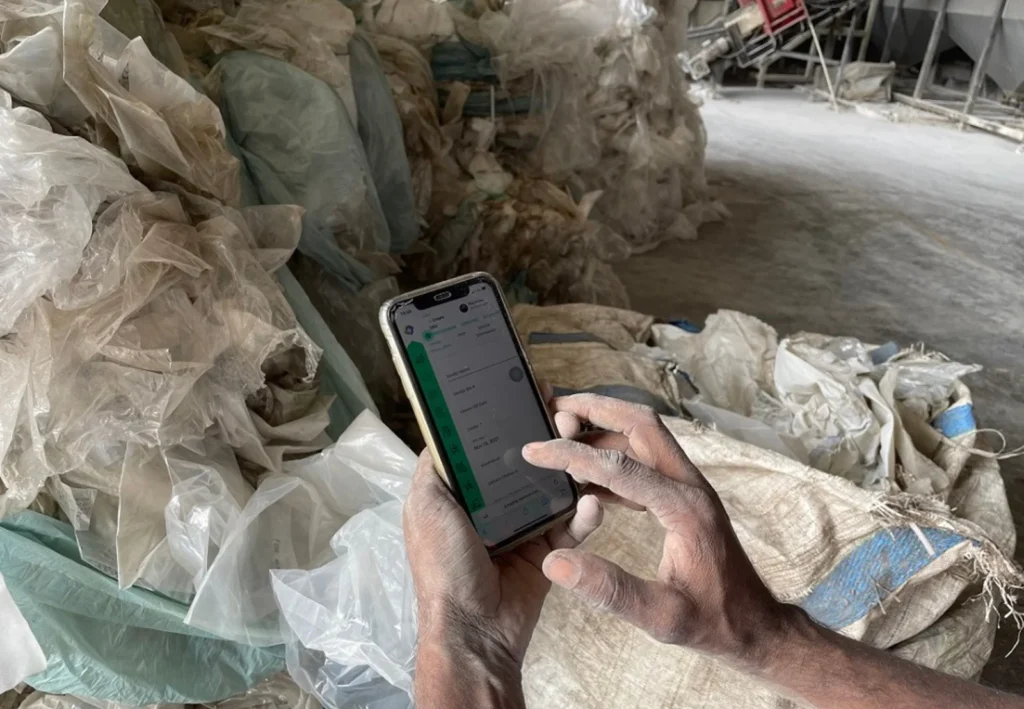
Recycled LDPE granules come from post-consumer film waste: milk and bread pouches, fruit and vegetable wrapping, and other flexible packaging collected from Indian households. Lucro’s rLDPE range for blown film includes LDC (MFI 0.90–1.20 g/10 min, density 0.925–0.935 g/cm³), LDBK, CSF01, CSF02, LDN400, LDN250, and LLN02 (MFI 1.5–2.5 g/10 min), each calibrated for a slightly different balance of flexibility and film strength. rLDPE is the right call wherever puncture resistance, sealability, and flexibility matter more than stiffness — shrink wrap, stretch film, and polybags being the obvious examples.
Understanding rPP — properties and applications
Recycled polypropylene granules are reprocessed largely from bottle caps, closures, woven sacks, and rigid food containers. PP has a higher melting point and greater stiffness than either polyethylene grade, along with good chemical and heat resistance, which is why it holds up in applications PE grades can’t handle. Lucro’s rPP portfolio spans copolymer grades for injection moulding (PPC10, PPC12, PPB20, PPN100) and homopolymer grades (PPBK, PPHO3, PPHO4, PPHO5, PPB50, PPB30), suited to caps, closures, and other injection-moulded rigid parts that need to withstand heat or repeated handling.
rHDPE vs rLDPE vs rPP — side-by-side comparison
| Property | rHDPE | rLDPE | rPP |
| Typical density | 0.94 – 0.97 g/cm³ | 0.91 – 0.94 g/cm³ | 0.90 – 0.91 g/cm³ |
| Rigidity | High | Low, flexible | High |
| Heat resistance | Moderate | Low | High |
| Common feedstock | Bottles, rigid containers | Pouches, film, wrap | Caps, closures, woven sacks |
| Typical process | Blow moulding, pipe extrusion | Blown film | Injection moulding |
How to choose the right grade for your industry
The right choice comes down to three things: your process, your mechanical requirement, and your end application. Packaging converters running blown film lines should evaluate rLDPE grades against their own MFI and density specs rather than the polymer family alone. Bottle and container manufacturers typically match rHDPE grades to their blow-moulding equipment and required wall stiffness. Producers of caps, closures, and other moulded parts should assess rPP grades for melt flow and impact performance under their actual injection cycle times. In every case, a PCR granule grade comparison only holds up in production if you check the technical data sheet against your own process parameters, not just the resin type.
Lucro’s recycled granule range
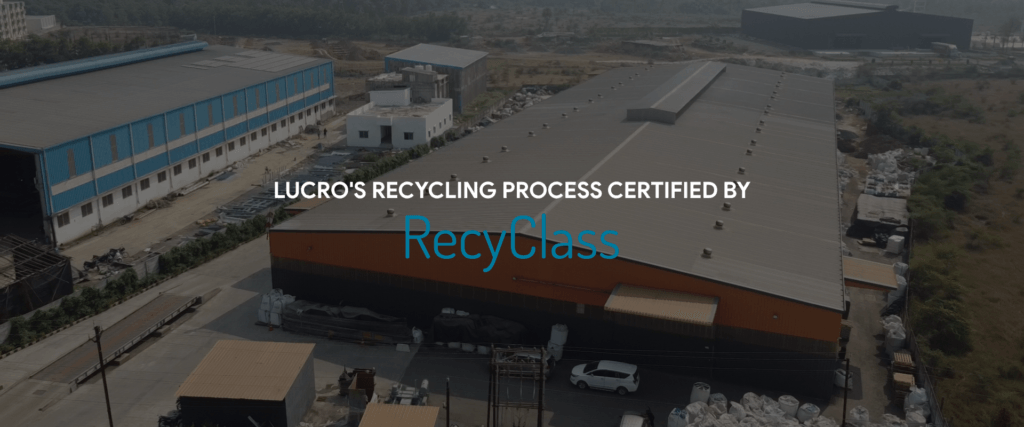
Lucro is a fully integrated waste management and recycling company that collects post-consumer dirty plastic waste across India and upcycles it into Post-Consumer Recycled (PCR) polyolefin granules. The company processes over 30,000 tons of post-consumer plastic waste into high-value recyclables every year, with each batch tested and calibrated before it reaches a converter’s line. Lucro’s recycled granule range spans rLDPE, rHDPE, and rPP across multiple grades, each backed by a technical data sheet, and supports more than 200 brands in their transition from virgin plastic to PCR-based packaging.
Conclusion
rHDPE, rLDPE, and rPP aren’t interchangeable — each is built around a different polymer structure suited to a different process and end use. Getting the match right starts with understanding these fundamental differences, and it holds up only when you verify performance against your own process data, not the recycled label alone. For businesses sourcing recycled polyolefin granules at scale, working with a manufacturer that maintains consistent testing and batch traceability is what makes that match reliable, order after order.