

Every day, households and businesses across India produce an enormous amount of waste, and more often than not, it all ends up in the same bin. That one habit alone makes waste management so much harder, slower, and more expensive than it needs to be.
Waste segregation, or separating waste at the source, just happens to be one of the most effective things we can do to build a cleaner, more sustainable future. So let’s get to it and find out what waste segregation really is, why it’s worth caring about, and how a few small changes in your home or work can add up to make a real difference.
Waste segregation is just a method of sorting waste based on the type of material it contains and how it should be processed afterwards. It’s about separating wet waste from dry waste, and then breaking down dry waste into separate piles like plastic, paper, glass, and metal, instead of just chucking everything into one bin.
For example, food scraps can be composted back into soil, but a plastic bottle must be collected, cleaned, and upcycled into new products. When all of these materials are mixed together, recyclable items are often contaminated and much more difficult to recover and reuse.


It is important to know the different types of waste so that waste can be managed effectively. Household and commercial waste can be broadly divided into a few main categories:
Wet Waste: Wet waste is biodegradable waste like food waste, vegetable peels, garden waste, tea leaves, etc. They are easily composted and can be returned to the soil.
Dry Waste: Dry waste is potentially recyclable waste such as paper, cardboard, plastic, glass, metal, and textiles. Once sorted, this material can be made into valuable post-consumer recyclate (PCR) and fed back into manufacturing.
Hazardous Waste: Batteries, chemicals, paints, medicines, and other hazardous materials need to be handled in a special way because they can pose risks to people and the environment.
E-Waste: Electronic items such as cables, chargers, mobile phones, and other electronic accessories should be collected separately, as many components can be recovered and recycled through authorised e-waste recycling channels.
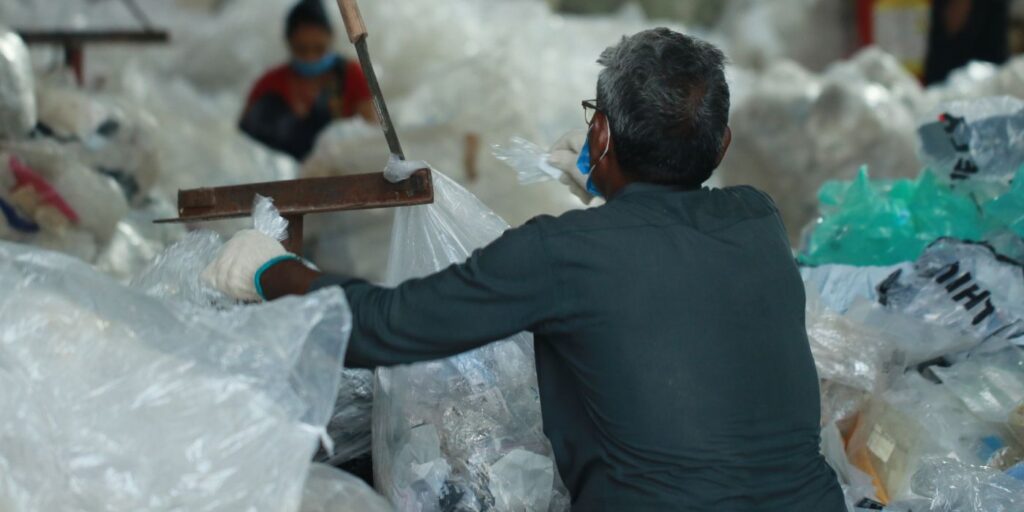
Plastic waste: Plastic, in particular, deserves special attention. Flexible plastic packaging like shampoo sachets, oil pouches, and wrappers is notoriously difficult to recycle once it gets mixed with food residue or other waste types. When kept clean and separated, however, this same plastic can be processed into post-consumer recyclate (PCR) and given a second life.
Sanitary waste: Used diapers, sanitary pads, tampons, condoms, and other hygiene products should be disposed of separately and securely wrapped before disposal to prevent contamination and protect sanitation workers and the environment.


Colored bins are basically there to make segregation simple and second nature. The exact colors can shift a bit depending on where you live, but generally, you’ll come across something like this:
It’s worth sticking to whatever color system your region recommends, since it’s what ensures the waste actually ends up going through the right processing channel once it leaves your home.
Segregation is really what sets up a cleaner, more efficient recycling system from the very first step. Here’s a few reasons why it matters so much:
This step makes all the difference for plastics in particular. Good sorting and cleanliness of post-consumer waste can produce high-quality post-consumer recycled resin, which provides real opportunities for circular manufacturing across a range of industries.
The impact of waste segregation extends far beyond a cleaner environment.
Segregated waste allows resources to move through the recycling value chain more efficiently, reducing our reliance on virgin resources.
Proper segregation will ensure that the recyclable material is not contaminated and will reduce unnecessary pollution due to improper waste handling.
Municipal authorities, recyclers, and industries can process sorted waste more efficiently, reducing time, effort, and operational costs.
Small, everyday acts like segregating wet and dry waste help build long-term awareness about responsible waste management.
Waste segregation isn’t complicated; it just needs a bit of consistency. Even something as simple as wet waste and dry waste segregation can make a big difference in the amount of material that is actually recovered and reused. It’s a small thing, but it adds up fast when you’re doing it in homes, in offices, even entire communities.
As India’s recycling systems continue to mature, this one step will become only more important. It’s what makes post-consumer waste worth something, creates a more resilient plastic and recycling ecosystem, and advances us toward a future where resources are reused, not wasted. This is how the transition to a truly circular economy begins with such simple choices.